Experience on Loan: How America's Retirees Are Powering the Next Era of Community Service
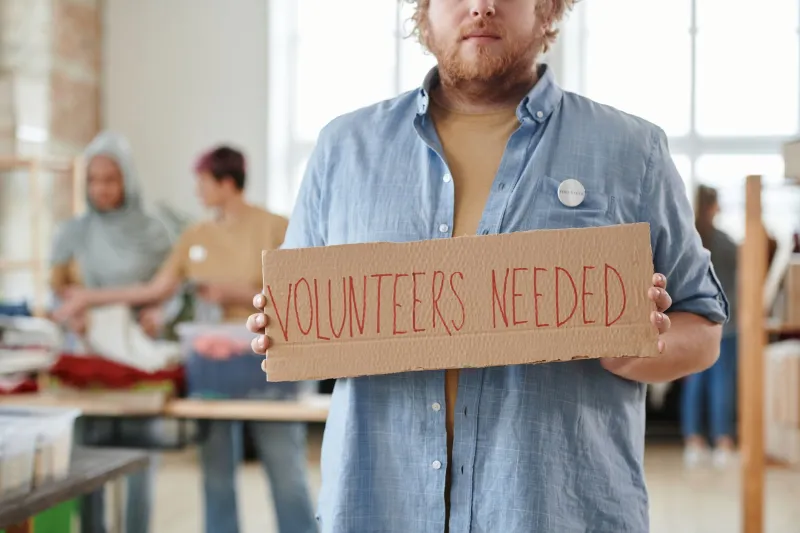
Every year, roughly four million Americans turn sixty-five. For previous generations, that milestone often meant a slow withdrawal from professional and civic life. Today's retirees are writing a different script. They are joining nonprofit boards, mentoring first-generation college students, managing food pantry logistics, and lending financial and operational expertise to organizations that could never afford such talent on the open market.
At Fundación SM, we have watched this shift reshape the communities where we work. The retirees arriving at our partner organizations are not filling casual slots—they are becoming institutional anchors. Understanding why, and how nonprofits can make room for them, may be one of the most important workforce questions of the coming decade.
The Encore Impulse: Why Retirement No Longer Means Stepping Back
Researchers sometimes call it the "encore career"—a period after primary employment ends when people seek purpose-driven work rather than simply more leisure. Surveys from organizations like Encore.org and the Corporation for National and Community Service consistently find that a majority of pre-retirees hope to remain engaged in service after leaving their careers.
The motivations are practical as much as philosophical. Americans are retiring earlier than they planned, living longer, and healthier than any cohort before them. A professional who leaves a corporate role at sixty-two may have twenty-five or more active years ahead. Filling that time with purpose is not a luxury; for many, it is a necessity for well-being. Studies linking sustained volunteering to lower rates of depression and improved cognitive health only strengthen the case.
What makes this moment distinct is the skill profile. Today's retirees come from careers in accounting, project management, healthcare, education, and technology. They arrive not merely willing to help, but equipped to do work that grassroots organizations often struggle to fund—bookkeeping, grant writing, strategic planning, and board governance.
What Experience Looks Like on the Ground
Consider a few composites drawn from the kind of partnerships Fundación SM cultivates across American communities:
- A retired hospital administrator who spends two days a week helping a free clinic streamline patient intake, cutting wait times nearly in half.
- A former high school principal who trains volunteer tutors at a literacy nonprofit, passing along decades of classroom instinct in a single semester.
- A retired CPA who joins the board of a small housing nonprofit and, within a year, puts its finances on a footing strong enough to win its first major federal grant.
None of these contributions required a checkbook. All of them required judgment—the kind that only accumulates over a long career. For small nonprofits operating on thin margins, a skilled retiree volunteer can function as an entire unfunded department.
The Retention Question: Keeping Experienced Volunteers Engaged
Experience is a two-way asset, and nonprofits that treat retiree volunteers casually often lose them. Our work suggests several practices that make the difference.
Match skills to genuine need. Retirees are quick to sense when they are being handed busywork. A thoughtful intake process—one that asks what a volunteer actually did in their working life—signals respect and unlocks far greater value.
Offer flexibility without vagueness. Many retirees travel, manage family caregiving, or simply prefer structured commitments. Clear role descriptions with predictable schedules outperform open-ended appeals.
Provide learning, not just tasks. Experienced volunteers still want to grow. Orientations on the community context, briefings on the population served, and honest conversations about organizational challenges keep engagement meaningful.
Recognize contribution, not just hours. A thank-you at the annual gala matters, but so does being consulted on real decisions. Retirees who feel like colleagues stay; those who feel like extra hands drift away.
A Demographic Wave Nonprofits Cannot Afford to Miss
The numbers make the stakes plain. As the Baby Boom generation moves fully into retirement, the pool of skilled, service-minded older adults will keep expanding through at least the 2030s. Meanwhile, many nonprofits report chronic shortages in exactly the areas retirees can fill: board governance, financial oversight, and program mentorship.
The opportunity is also intergenerational. When a sixty-eight-year-old engineer mentors a twenty-four-year-old program coordinator, organizations gain something no training budget can buy: continuity. Knowledge that would otherwise leave with each staff turnover instead circulates through the community.
Building the Bridge
For funders and community foundations, the practical steps are straightforward. Invest in volunteer infrastructure—coordinators, training materials, background screening—so that skilled retirees can be deployed well. Create targeted board-matching programs that connect retiring professionals with nonprofits that need their expertise. And tell the stories, because visible examples are the most powerful recruitment tool available.
The second act of American life is being rewritten in real time. If nonprofits, funders, and communities meet this moment with intention, the coming decades could see the largest transfer of civic experience in the nation's history—not inherited passively, but placed deliberately where it can change lives. That is a form of generosity no grant ledger fully captures, and one our communities cannot afford to leave on the table.