The Courtesy of a Clear No: What Vague Grant Rejections Cost the Nonprofit Sector
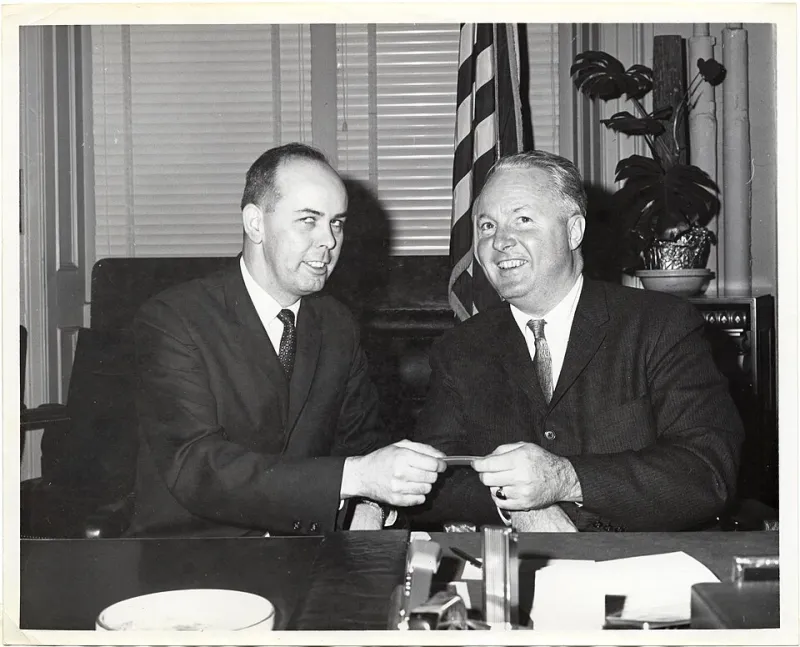
Photo: City of Boston Archives from West Roxbury, United States, CC BY 2.0, via Wikimedia Commons
The email usually arrives on a Friday afternoon, months after the deadline. It thanks the organization for its interest, notes that the foundation received an unprecedented number of worthy requests, regrets that it cannot fund every deserving proposal, and wishes the applicant success in its important work. It does not say what happened.
Multiply that paragraph by several hundred thousand applications a year across the American philanthropic sector, and the scale of the problem becomes clear. The rejection letter is the most widely distributed document in grantmaking and the least carefully written. Its vagueness is usually attributed to kindness, or to legal caution, or to the sheer arithmetic of form letters. None of those explanations is sufficient, and all of them understate the cost.
What a Decline Actually Communicates
An applicant reads a rejection letter looking for one thing: a theory of the decision. Did we misunderstand the guidelines? Was the budget too large, the geography wrong, the outcomes insufficiently specified? Was the proposal competitive and simply unlucky?
A generic decline answers none of these. It conveys one message clearly, regardless of intent: we are not going to tell you. And because the applicant must decide whether to reapply, it converts a decision into a guessing game.
Consider how the information asymmetry compounds. The funder knows its own portfolio, its board's discussion, the strategic shift underway, the competing proposal from a sister organization in the same city. The applicant knows only that the answer was no. Every subsequent application is made without the benefit of the previous one.
Fit Is a Word With a Subtext
Among program officers, the most common shorthand in a decline is that the proposal was not a strong fit. It sounds neutral. In practice, fit is a vessel for at least five distinct judgments that funders rarely separate:
- Strategic fit: the work does not advance a priority the funder has chosen, sometimes for reasons never published.
- Portfolio fit: the funder has already committed to another organization doing similar work nearby.
- Timing fit: the money exists, but not in this cycle.
- Capacity fit: the organization appears unable to absorb or report on the grant.
- Relationship fit: an unstated discomfort with leadership, history, or governance.
The first three are ordinary and disclosable. The last two are judgment calls about people and institutions, and they are precisely the ones a funder is least willing to put in writing. That reluctance is understandable. It is also the reason so many declines are useless.
Risk Tolerance by Another Name
Listen closely to how grant decisions are described inside a foundation, and a pattern emerges. Proposals are praised for being proven, tested, evidence-based, and low-risk. Language of this kind does real work. It establishes whose work looks fundable and whose does not, usually without acknowledging that the criteria are aesthetic as much as analytical.
An organization with a decade of audited financials and a communications director will consistently appear lower-risk than a neighborhood group with three staff and a compelling track record, even when the second is doing the harder work. When that preference is never stated, applicants infer it slowly and expensively, one rejection at a time. When it is stated, applicants can make an informed decision about whether to keep applying or to seek funding elsewhere.
A foundation that prefers established grantees is entitled to that preference. It is not entitled to conceal it and then blame fit.
The Cost of a Cheap No
Vague declines are inexpensive to produce and expensive to receive.
For the applicant, the cost is measured in staff hours spent on a proposal that never had a chance, in the morale of a development director who cannot tell whether the work or the paperwork was at fault, and in the erosion of trust that follows the third unexplained rejection from the same funder. Nonprofit professionals talk to one another. Patterns of unhelpful communication become part of a funder's reputation as reliably as the size of its checks.
For the sector, the cost is a collective misallocation of effort. Every hour a small organization spends writing to a funder that will never fund it is an hour not spent on programs. The aggregate waste is substantial and entirely avoidable.
For the funder, the cost is subtler: a portfolio that narrows over time toward organizations fluent in the idiom of application writing rather than the organizations closest to the problem. That drift is rarely noticed because no one measures the proposals that stopped arriving.
What a Better No Looks Like
Transparency in declining a grant does not require disclosing the deliberations of a review committee. It requires deciding, in advance, what the funder is willing to say and then saying it consistently.
A workable standard has several components.
Decide within a published timeline. If a funder commits to notifying applicants within eight weeks, it should notify within eight weeks. Silence is itself a message, and not a flattering one.
Use a small set of honest reason categories. Not fit, which explains nothing, but: outside our published priorities; declined for budget reasons; organization ineligible for this program; proposal insufficiently developed on the stated criteria; funded a comparable organization this cycle. Five categories, clearly defined, would transform the applicant's ability to learn.
Offer a feedback window. A single scheduled call per declined applicant, thirty minutes, once per cycle, is a modest expenditure against the goodwill it produces.
Publish the criteria that actually apply. If geography, budget size, or organizational age functions as a screen, state it on the guidelines page. Applicants cannot optimize for rules they cannot see.
Say no earlier. A short letter of inquiry, reviewed quickly and declined decisively, spares everyone the full proposal. The two-stage process is common in principle and inconsistently enforced in practice.
Thank the applicant for the work, once, in plain language. Not as a substitute for substance, but as a baseline of respect.
The Sector's Shared Interest
The relationship between funders and nonprofits is often described in the language of partnership. Rejection letters are where that language is tested. A funder that communicates clearly when the answer is no is signaling that the applicant is worth the truth — which is what a partner would do.
Fundación SM's strategic philanthropy work begins from the premise that trust is built in the ordinary transactions of a funding relationship, not only in the grants that succeed. The decline letter is one of those transactions. It is read carefully, remembered for years, and costs almost nothing to write well.
A clear no is not unkind. It is the most useful thing a funder can say.