Giving with Intention: How to Sustain Your Philanthropic Commitment Without Burning Out

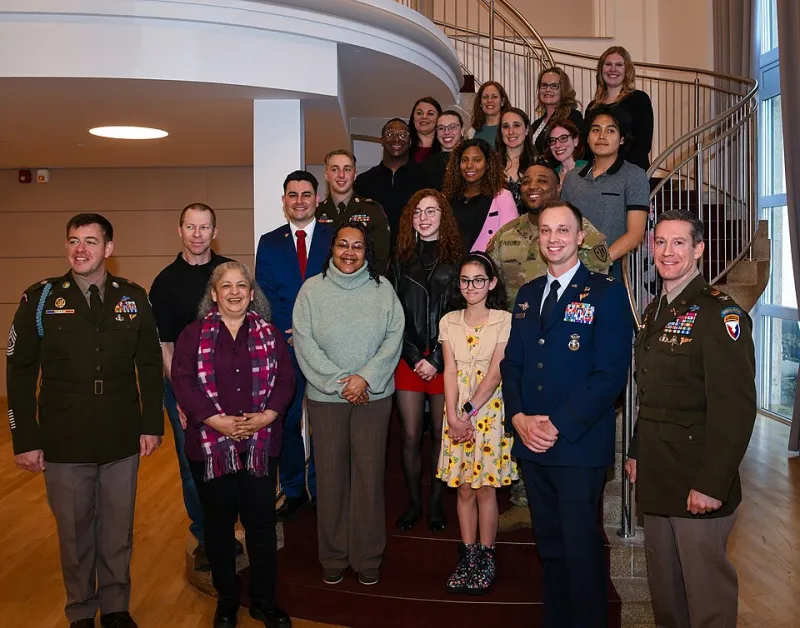
Photo: Dawn Armfield darmfield, CC0, via Wikimedia Commons
The impulse to give is one of the most affirming expressions of human connection. Yet for a growing number of Americans, that impulse is becoming increasingly difficult to sustain. Fundraising appeals arrive by the dozens — in email inboxes, on social media feeds, through direct mail, and via text message. Each carries a genuine cause, a compelling story, and an urgent call to action. And for donors who care deeply about the world, the cumulative weight of that urgency can become paralyzing.
This phenomenon — broadly referred to as donor fatigue or compassion fatigue — is not a sign of moral weakness. It is a predictable psychological response to sustained emotional demand without adequate structure or recovery. Understanding it, and designing a giving practice that accounts for it, is among the most important things a committed philanthropist can do — both for their own wellbeing and for the communities that depend on their sustained generosity.
The Anatomy of Donor Fatigue
Researchers at the Indiana University Lilly Family School of Philanthropy have documented a consistent pattern among donors who experience burnout: the cycle typically begins with reactive, emotionally driven giving. A natural disaster, a viral social media campaign, or a particularly moving fundraising appeal prompts an immediate donation. The emotional relief that follows is real but temporary. When the next appeal arrives — and it always does — the donor must generate that same emotional response from a position of diminished capacity.
Over time, the gap between the frequency of appeals and the donor's emotional reserves widens. The result is not simply reduced giving; it is often a wholesale withdrawal from philanthropic engagement, accompanied by feelings of guilt, inadequacy, or cynicism about the nonprofit sector as a whole.
This is the hidden cost of unstructured generosity. The organizations that suffer most from donor fatigue are frequently those serving the most vulnerable populations — the ones whose needs are chronic rather than acute, and whose funding depends not on a single viral moment but on a steady, reliable base of committed supporters.
The Misconception at the Heart of Modern Giving
American giving culture has long celebrated the spontaneous gesture — the impulse donation, the matching campaign, the year-end tax deduction made in haste. These contributions are not without value. But they reflect a broader misconception: that the measure of a donor's generosity is the size or frequency of individual gifts, rather than the depth and durability of their philanthropic commitment.
Research consistently challenges this assumption. A 2022 study published in the Journal of Behavioral Decision Making found that donors who established deliberate, values-aligned giving plans reported significantly higher satisfaction with their philanthropy and were substantially more likely to maintain or increase their giving over a five-year period compared to those who gave reactively.
The implication is clear: intentionality is not the enemy of generosity. It is, in fact, its most reliable protector.
Building a Giving Practice That Lasts
The framework that emerges from both research and practitioner experience shares several consistent elements. Each is worth examining in detail.
Define Your Philanthropic Identity
Before determining where to give, a donor must first clarify why they give. This is not a philosophical exercise in abstraction; it is a practical act of self-knowledge. What issues do you find most urgent? What populations do you feel most connected to? What kind of change — immediate relief, systemic reform, capacity building — aligns most closely with your understanding of how progress happens?
Writing these answers down, even in a simple document, creates an anchor. When the next emotionally compelling appeal arrives, a donor with a defined philanthropic identity can evaluate it against a stable framework rather than a momentary emotional state.
Establish a Giving Budget and Protect It
Financial advisors routinely recommend treating charitable giving as a budget line item rather than a discretionary expense. This approach serves two purposes. First, it ensures that giving does not expand beyond what a donor can sustain without financial stress — a common driver of fatigue. Second, it protects the philanthropic commitment from being crowded out by other competing demands.
The specific percentage matters less than the consistency. Whether a donor designates two percent or twenty percent of their annual income to charitable giving, the act of setting and honoring that boundary transforms giving from an event into a practice.
Concentrate Your Giving
One of the most counterintuitive findings in philanthropic research is that giving to fewer organizations tends to produce both greater personal satisfaction and greater organizational impact. When a donor spreads modest contributions across a large number of causes, no single organization benefits meaningfully, and the donor retains no substantive relationship with any of them.
Conversely, concentrating giving allows donors to develop genuine familiarity with an organization's work, leadership, and outcomes. This familiarity is precisely what transforms a transaction into a relationship — and relationships are the foundation of sustained engagement.
Organizations like Fundación SM, which operate across multiple program areas within a coherent mission, offer donors the opportunity to experience this depth of engagement without sacrificing breadth of impact.
Embrace Multi-Year Commitments
Nonprofit organizations face a structural challenge that is rarely visible to casual donors: the gap between programmatic need and funding certainty. When organizations cannot predict their revenue beyond a single fiscal year, they are forced to divert staff time and leadership attention toward constant fundraising rather than program delivery.
Multi-year pledges address this problem directly. A donor who commits to three or five years of annual support provides something more valuable than the sum of those contributions: they provide planning certainty. For mission-driven organizations, certainty is the precondition for ambition.
Schedule Intentional Renewal
Even the most committed donors benefit from periodic reassessment. Setting aside time once a year — not to question whether to give, but to evaluate whether the current portfolio of giving still reflects evolving values and priorities — keeps a philanthropic practice alive and responsive. It also provides a structured moment to acknowledge the impact of past contributions, which research identifies as a significant predictor of continued donor motivation.
The Role of Emotion in Strategic Giving
It would be a mistake to conclude that strategic giving requires the suppression of emotional response. Empathy is not a liability in philanthropy; it is the animating force behind it. The goal is not to give coldly, but to give wisely — to allow emotional resonance to identify what matters, and then to allow deliberate strategy to determine how to respond.
The most effective philanthropists are those who have learned to honor both impulses: the heart that responds to suffering, and the mind that asks how response can be made most durable and most effective.
A Final Word on Sustainability
The communities that Fundación SM serves do not face temporary challenges. Poverty, educational inequity, food insecurity, and social isolation are not emergencies that will resolve themselves after a single campaign. They are conditions that require sustained, intelligent, and emotionally grounded commitment from donors who understand that their generosity is most powerful when it endures.
Charity fatigue is real. But it is not inevitable. With the right structure, the right focus, and the right understanding of why we give, it is entirely possible to remain a committed, engaged, and effective philanthropist — not for a season, but for a lifetime.
We invite you to explore how Fundación SM can serve as a partner in building a giving practice that reflects your deepest values and sustains your capacity to create meaningful change. The communities we serve are counting not just on your generosity, but on its continuity.