The Hidden Philanthropic Frontier: Recognizing and Resourcing America's Invisible Caregivers
Philanthropy has a visibility problem.
Not a lack of visibility for philanthropy itself—foundations and major donors are, if anything, quite publicly celebrated. The visibility problem is directional: the gaze of institutional giving tends to flow toward the legible, the credentialed, and the formally organized. What it consistently misses is the vast, unglamorous, and profoundly consequential care work happening in American homes, backyards, and kitchen tables every single day.
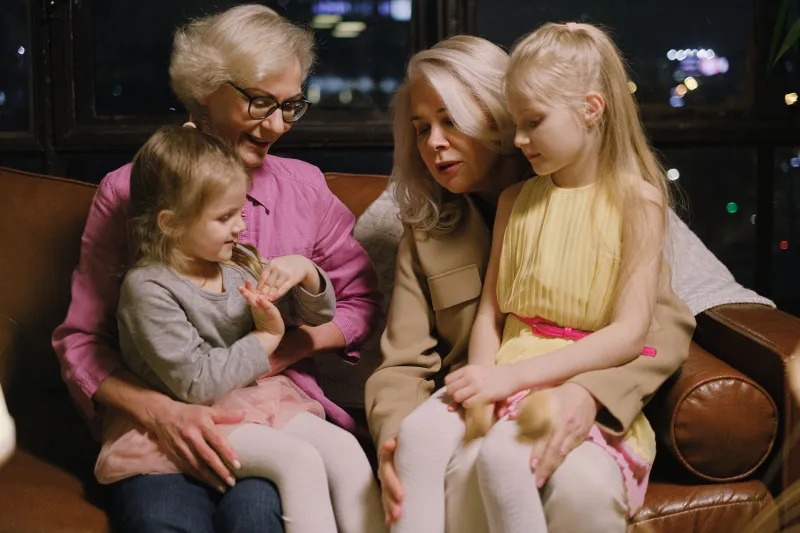
Consider this: there are approximately 2.7 million grandparents in the United States raising their grandchildren as primary caregivers, according to U.S. Census Bureau data. Millions more adults are simultaneously supporting aging parents while raising their own children—the so-called "sandwich generation," a phrase that has become so familiar we have perhaps stopped hearing what it describes. In immigrant communities across the country, multigenerational households function as intricate mutual support systems, absorbing the shocks of language barriers, economic precarity, and cultural dislocation through networks of reciprocal care that no government program fully accounts for.
None of this work is funded. Very little of it is even seen.
The Economy of Unpaid Care
Economists have attempted to quantify what informal caregiving contributes to American society, with estimates running into the hundreds of billions of dollars annually. AARP has estimated the value of unpaid family caregiving at over $470 billion per year—a figure that dwarfs total Medicaid spending on long-term care. And yet this labor remains almost entirely outside the scope of mainstream philanthropic investment.
Why? Part of the answer is structural. Philanthropic dollars flow most efficiently through organizations with tax-exempt status, program officers, and the administrative infrastructure to receive and report on grants. Informal caregiving networks have none of these things. They are not nonprofits. They do not have websites. They do not attend foundation convenings. They are, in the most precise sense, invisible to the systems through which philanthropic capital moves.
But invisibility is not the same as unimportance. In many of the communities where Fundación SM and organizations like it do their work, these informal networks are not supplementing the social safety net—they are the social safety net. When a grandmother in South Texas takes in her three grandchildren because their parents are in crisis, she becomes a foster parent, a therapist, a tutor, and an economic provider, all without a salary or a support system of her own.
The question for donors who care about community impact is not whether this work deserves support. It is why we have taken so long to recognize it.
What Philanthropic Blindness Costs Communities
The failure to resource informal caregiving networks is not a neutral oversight. It has real consequences.
Grandparents raising grandchildren frequently do so on fixed incomes, navigating legal systems that were not designed for their situation, and caring for children who have often experienced trauma. Without financial support, legal assistance, or access to respite care, many of these caregivers are pushed to the edge of what they can sustain. When they break—financially, physically, emotionally—the children in their care enter the formal foster care system, at enormous cost to the children, to the state, and to the community bonds that made informal care possible in the first place.
In immigrant communities, the calculus is similarly stark. Multigenerational households that function as economic and emotional anchors for newly arrived family members require resources—language access, health navigation, financial literacy support—that they rarely receive. When these households destabilize, the ripple effects move through entire communities.
Funding these networks before they reach crisis is not only more humane. It is dramatically more cost-effective than funding the institutional responses that follow collapse.
Practical Frameworks for Reaching Invisible Caregivers
For donors who are genuinely committed to supporting this work, the challenge is not motivation—it is methodology. How do you fund people and networks that do not have grant applications?
Work through trusted intermediaries. Community health workers, parish nurses, school social workers, and community organizers already know where informal caregiving networks exist. Funding these connectors—and explicitly charging them with identifying and supporting caregiver networks—is one of the most effective ways to reach people who will never come to a foundation's front door.
Use direct cash transfer models. A growing body of evidence supports the efficacy of direct, unrestricted cash transfers to caregivers as a philanthropic tool. Programs like the Magnolia Mother's Trust in Mississippi have demonstrated that low-income caregivers, given direct financial support without conditions, make sound decisions that improve outcomes for their families. Donors willing to embrace this model can reach caregivers that no program-based grant ever will.
Invest in legal and navigational support. For grandparents raising grandchildren, one of the most critical unmet needs is legal assistance—help establishing guardianship, accessing public benefits, and navigating school enrollment. Funding legal aid organizations to specifically serve kinship caregivers is a high-impact, underutilized philanthropic strategy.
Support caregiver peer networks. Isolation is itself a compounding burden for informal caregivers, many of whom have little time and less energy for self-care. Funding organizations that convene caregivers—creating space for peer support, shared learning, and collective advocacy—addresses both the practical and emotional dimensions of caregiving labor.
Advocate for systemic change. Individual philanthropic investments, however well-designed, cannot substitute for policy change. Donors who are serious about this issue can use their platforms and resources to support advocacy for caregiver tax credits, expanded kinship care support, and paid family leave policies that recognize the full range of caregiving relationships.
A Different Kind of Generosity
There is a version of philanthropy that is drawn to the visible: the named building, the celebrated program, the measurable outcome reported in an annual report. That version of generosity has its place. But the communities that Fundación SM serves are also shaped by a quieter, less celebrated kind of generosity—the grandmother who rearranges her entire life to raise a grandchild she did not plan for, the adult daughter who cuts her work hours to care for a parent with dementia, the neighbor who shows up every day because there is no one else.
These caregivers are not asking for recognition. They are asking, in the most fundamental sense, for the resources to keep going. For donors willing to look past the familiar channels and fund the invisible work that holds communities together, the opportunity is both urgent and profound.
Building communities and changing lives sometimes means seeing what the rest of the philanthropic world has chosen not to look at—and deciding that it matters anyway.