From One Spark to Five Cities: Lessons in Scaling Community-Driven Change

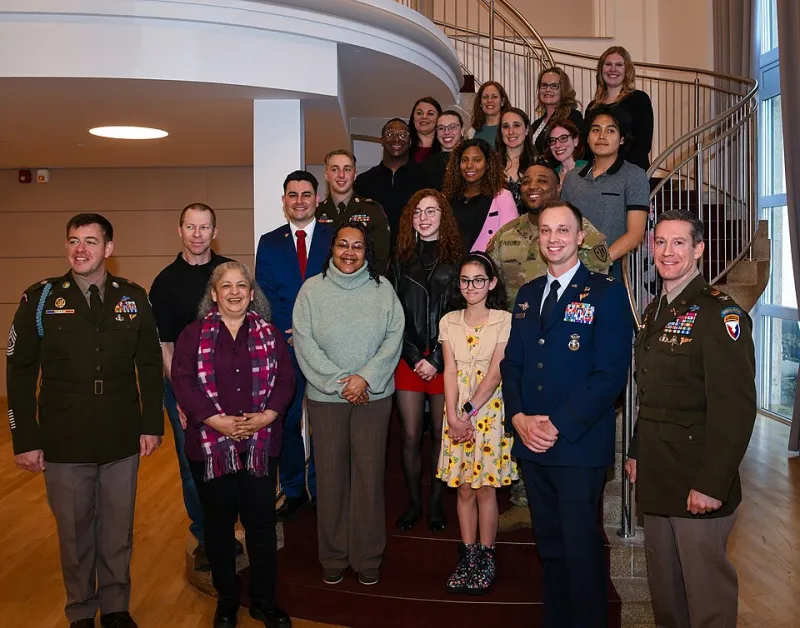
Photo: diverse community members collaborating around a table in a community center, via images.stockcake.com
A Single Idea That Refused to Stay Put
In the fall of 2019, a modest workforce readiness program launched in a mid-sized city in the American Midwest. Its founders — a coalition of local nonprofits, community college administrators, and a small family foundation — had no grand ambitions of national replication. They simply wanted to address a stubborn local problem: a persistent gap between the skills employers needed and the credentials job-seekers held, particularly among adults returning to the workforce after long absences.
What they built was careful, deliberate, and deeply rooted in the specific texture of their community. It connected participants not just to job training, but to mentors, childcare support, and a peer network that outlasted the formal program itself. Within eighteen months, the results were striking enough that program leaders began receiving calls from counterparts in other cities who had heard about it through national nonprofit convenings and word of mouth.
By 2023, adapted versions of the program were operating in four additional cities — Detroit, Albuquerque, Baltimore, and Greenville, South Carolina — each shaped by local context but anchored to a shared framework. The original spark had become something far larger than its founders anticipated.
Why This Program Traveled Well
Not every successful community initiative is replicable. Many programs that produce extraordinary results in one location depend so heavily on a specific leader's personality, a unique local partnership, or a particular funding moment that they cannot be faithfully transported elsewhere. What distinguished this workforce initiative was a set of structural choices made early on.
First, the program's designers documented everything. From intake assessments to mentor matching protocols to participant feedback loops, the operational logic was captured in plain language that other organizations could understand without requiring extensive translation. This documentation was not bureaucratic for its own sake — it reflected a genuine commitment to learning and accountability that made the model legible to outside observers.
Second, the program was built around principles rather than prescriptions. The core framework emphasized trust-building, flexible scheduling, and employer co-design — values that could be interpreted differently in different cities without losing their essential meaning. When the Baltimore team adapted the model for a population with significant reentry needs, they were able to do so without dismantling the underlying architecture.
Third, and perhaps most importantly, the founding coalition actively sought peer relationships with organizations in other cities rather than positioning itself as a franchisor. The expansion felt collaborative rather than hierarchical, which generated genuine investment from local partners rather than passive compliance.
The Role of Strategic Foundation Support
Foundations played a critical role in enabling this movement — but not always in the ways that might be assumed. The initial grant that funded the pilot was relatively modest by philanthropic standards. What mattered more was the structure of the support: a multi-year commitment that gave program staff the stability to experiment and refine, paired with access to a network of peer organizations and a modest investment in documentation and communications.
When replication began to occur organically, a regional foundation stepped in to fund what program leaders called a "learning collaborative" — a structured space where teams from each city could share challenges, compare data, and problem-solve together. This investment did not require proportional increases in funding for each new site. Instead, it leveraged the collective intelligence of people already doing the work, reducing the learning curve for newer cities dramatically.
This approach reflects a broader principle that forward-thinking foundations are increasingly embracing: that the most powerful philanthropic investments are often those that build connective tissue between organizations rather than simply funding individual programs in isolation. A dollar spent on shared learning infrastructure can multiply the effectiveness of many dollars already deployed.
What Each City Brought to the Table
One of the most instructive dimensions of this story is the degree to which each city's adaptation enriched the broader movement. The Albuquerque team, working in a community with significant Indigenous and Hispanic populations, developed culturally specific mentorship practices that were subsequently adopted by several other sites. The Detroit team's experience navigating partnerships with unionized employers produced a stakeholder engagement guide that became a widely referenced resource across the network.
This bidirectional flow of learning — from the originating city to new sites, and back again — is what distinguishes a genuine movement from simple program replication. It requires a certain humility from founding organizations, who must be willing to acknowledge that their original design was not the final word. It also requires foundations to resist the impulse to freeze a model at the moment of its first success and instead fund the ongoing evolution that keeps it relevant.
Implications for Foundations Seeking Scalable Impact
The story of this workforce initiative carries several practical lessons for foundations committed to maximizing their social impact without simply spending more money.
Invest in documentation early. Programs that cannot explain their own logic clearly will struggle to travel. Modest investments in capturing operational knowledge — through written guides, video documentation, or structured reflection processes — can dramatically increase a program's potential for replication.
Fund the connective infrastructure. Peer learning networks, shared data systems, and cross-city convenings are often underfunded relative to direct service delivery, yet they are precisely what allows a movement to cohere. Foundations willing to support this infrastructure play an outsized role in enabling scale.
Prioritize principles over blueprints. Programs built around rigid prescriptions often fail when transplanted to new contexts. Those built around clear values and flexible frameworks tend to adapt more successfully while preserving what matters most.
Celebrate adaptation as fidelity. When a partner city modifies a program to serve its community better, that is not a departure from the original vision — it is an expression of the original vision's deepest intention. Foundations that understand this distinction create conditions for genuine growth.
Building Movements, Not Just Programs
At Fundación SM, we believe that lasting community change is rarely the product of a single organization working in isolation. It emerges from networks of committed people who trust one another enough to share what they know, acknowledge what they don't, and build on each other's work with generosity and rigor.
The workforce initiative described here did not become a five-city movement because it was perfectly designed from the start. It became a movement because the people behind it were willing to learn in public, share their tools freely, and invite others into genuine partnership. That spirit — more than any particular program model — is what foundations can most powerfully nurture and sustain.