The Ballot Box on Main Street: Inside One Small Town's Experiment in Grantmaking by Its Own Residents
A Town That Decided to Fund Itself
Harmon's Creek, population 4,200, sits two hours from the nearest metropolitan airport and farther still from the attention of institutional philanthropy. Like hundreds of small communities across the American heartland, it has watched its hardware store close, its school consolidation debates stretch on, and its young people leave for cities that promise more. What it has not had — until recently — is a funder that understood the difference between what the town needs and what a distant program officer assumes it needs.
Three years ago, a retired schoolteacher and a grain cooperative manager began asking neighbors a simple question: if fifty households gave fifty dollars a year, what could that money do if the town itself decided? The answer became the Harmon's Creek Community Chest, a giving circle that has since grown to nearly two hundred members and, this spring, completed its first fully participatory grant cycle.
How the Money Moves
The mechanics are deliberately unglamorous. Members contribute what they can — most give between $25 and $100 annually. A volunteer finance committee pools the funds in a modest account at the local bank. Then, each February, the circle opens its grant window.
Anyone in town may submit a proposal, and the bar for entry is intentionally low. Last cycle's applications, scrawled on forms available at the library and the co-op, ranged from a request for new batting nets at the youth field to a proposal for a shared freezer unit so the food pantry could accept bulk donations from regional farms.
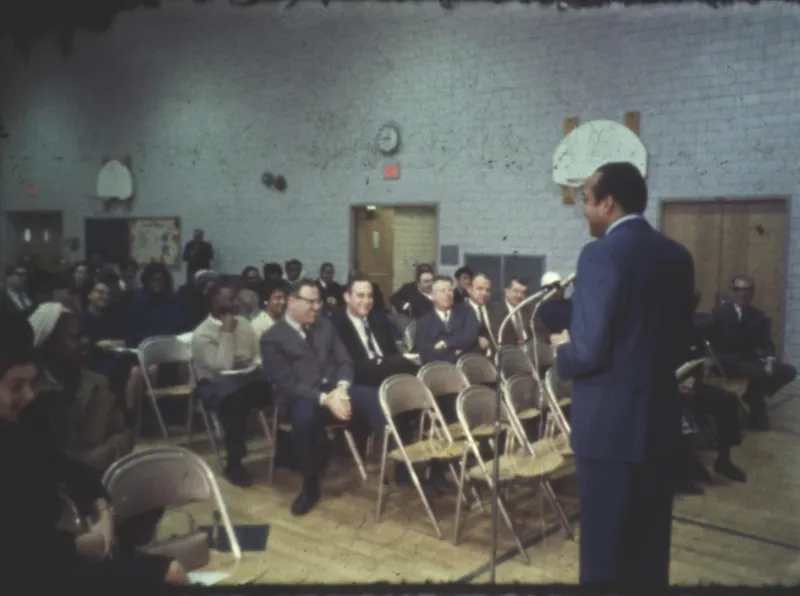
What happens next is the part that distinguishes participatory grantmaking from traditional philanthropy: every member votes. Ballots arrive by mail and are counted at a public meeting in the school gymnasium, where applicants are invited — though not required — to speak for two minutes about their proposals.
The Meeting Where the Town Weighs Its Priorities
At this year's vote, the gymnasium held perhaps eighty residents folding chairs into uneven rows. A proposal to repair the walking trail behind the middle school competed against a fund for emergency car repairs for shift workers — a need that surfaced when a woman described losing a job over a transmission. A teenager argued for a summer music program. The hardware store's former owner made the case for a tool-lending library.
The emergency car repair fund won decisively, and the conversation that followed was as instructive as the vote itself. Residents who had never spoken at a public meeting debated how the fund should verify need without humiliation. A mechanic volunteered discounted labor. The county extension agent, present in the audience, noted that a similar program existed two counties over and offered to share its application forms.
No professional grantmaker could have purchased that meeting. It was, in effect, a needs assessment, a coalition-building exercise, and a civic education class conducted for the price of coffee and store-bought cookies.
What Proximity Sees That Distance Cannot
The case for local decision-making is often made in the abstract — appeals to autonomy and self-determination. What the Harmon's Creek cycle reveals is something more concrete: the informational advantage of proximity.
National funders rely on data, and data is notoriously poor at capturing the texture of small-town need. A county-level poverty statistic cannot know that the food pantry's real bottleneck is refrigeration, or that transportation, not unemployment, is what keeps residents from steady work. When residents control the grantmaking, that knowledge travels the short distance from lived experience to funding decision in a single conversation.
There is also an accountability structure that no reporting requirement can replicate. A grantee who fails to deliver answers to neighbors at the grocery store, not to a program officer by email. In a town this size, reputation is the strongest compliance mechanism ever devised.
The Limits of the Model
Honesty requires acknowledging what giving circles cannot do. The Harmon's Creek Community Chest distributed $6,800 this year — transformative for a freezer unit, trivial against a failing water system. Small-town philanthropy supplements public capacity; it cannot replace it. Communities like this one still depend on county budgets, state programs, and, yes, the larger foundations whose scale no giving circle can match.
There is also a risk of insularity. Towns that fund only their own can entrench existing hierarchies — the same civic-minded families deciding, cycle after cycle, what counts as need. Harmon's Creek has begun addressing this by recruiting members through the church food pantry and the high school, deliberately widening who holds a ballot.
A Replicable Idea
The model's appeal lies partly in its accessibility. Organizations like the giving-circle networks that have grown across the country offer templates, and a circle can be launched with little more than a bank account, a volunteer committee, and the willingness to hold a public meeting. In an era when trust in distant institutions continues to erode, the proposition that people will fund what they get to decide is proving out in gymnasiums from Kansas to Maine.
For Fundación SM, which works alongside communities rather than over them, the lesson of Harmon's Creek is straightforward: the most sophisticated grantmaking strategy available to a small town may be the one its residents design themselves. Philanthropy's role, in that arrangement, is not to lead but to stand behind — supplying resources, technical help, and the humility to let a town of 4,200 people show everyone else how it's done.