Where Belonging Lives: The Ordinary Spaces Holding American Communities Together
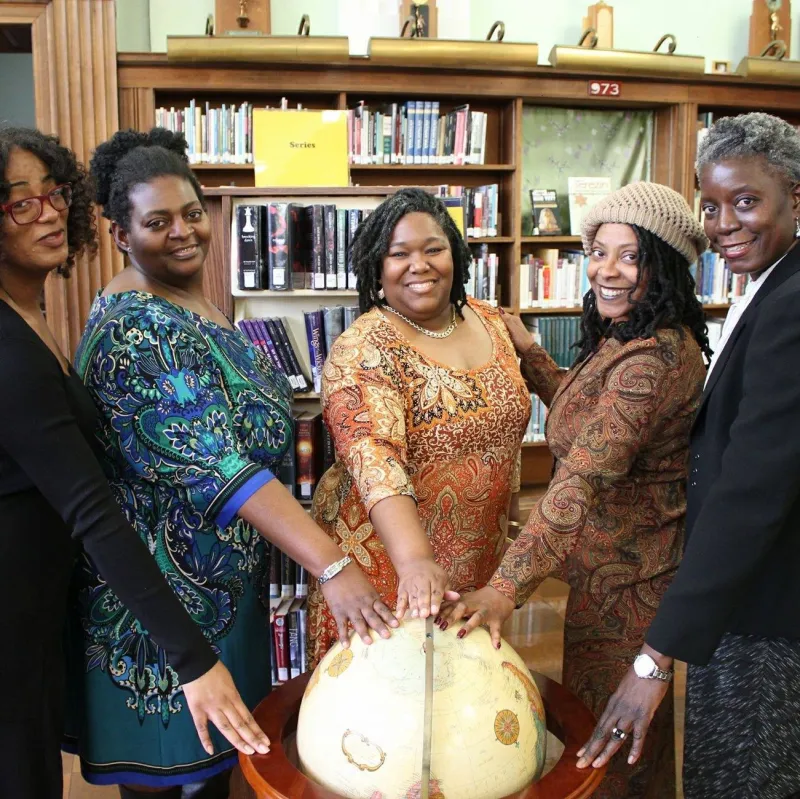
Ask most Americans where civic life happens, and they will name a building that does not exist anymore — the shuttered grange hall, the consolidated school, the diner that closed when the highway bypassed town. What replaced those gathering spots was rarely anything formal. More often, it was the library branch on the east side, the fellowship hall behind a small church, or the corner grocery whose owner kept a bulletin board by the register.
These are the places sociologist Ray Oldenburg called "third places" — the spaces between home and work where people gather without an appointment, a fee, or an agenda. And across the United States, they are quietly disappearing.
The Slow Erosion of Everyday Gathering
The numbers are sobering. Thousands of public libraries have cut hours or closed branches since 2020. Rural congregations consolidate at a steady clip, taking their basements and parking lots — often the only large gathering spaces for miles — out of circulation. Independent corner stores, squeezed by chains and delivery apps, close by the hundreds each year.
The loss is easy to underestimate because each closure looks small. A branch library is not a hospital. A corner store is not a food bank. But these spaces performed functions no one was officially assigned: they were where a teenager met a mentor, where a widow had a reason to leave the house, where a dispute between neighbors could be softened by a familiar face behind a counter.
When they vanish, the damage does not appear in any dataset. It appears in loneliness statistics, in declining volunteer rosters, in the growing share of Americans who say they never talk to their neighbors.
Three Communities Refusing to Let Go
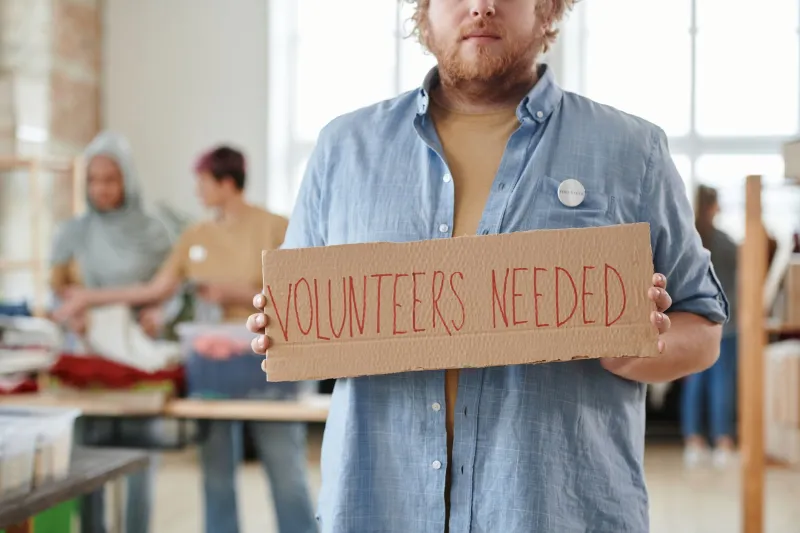
In a working-class neighborhood of Fort Wayne, Indiana, residents rallied when their branch library faced reduced hours. Rather than accept the cut, a coalition of church leaders, retired teachers, and a local credit union negotiated a shared staffing model — volunteers from the congregations covering the front desk during peak after-school hours. The branch now hosts a weekly job-readiness clinic that grew organically out of conversations at the copy machine.
Outside Taos, New Mexico, a general store that served three small communities closed in 2022. Within eight months, a land grant community organization had purchased the building, restoring the counter and adding a commercial kitchen. The store now doubles as a food distribution point and a site for high school students to earn service hours — and, its director notes, simply to be somewhere on a Saturday.
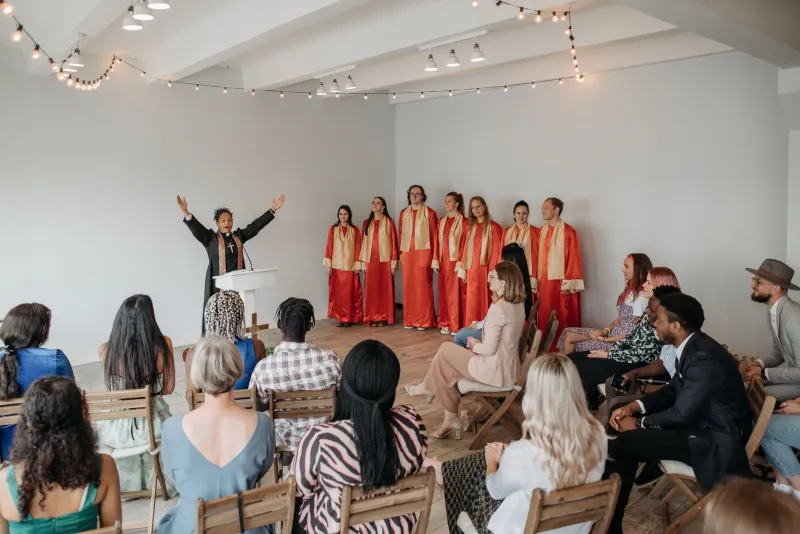
In a fading mill town in western North Carolina, a congregation voted to keep its fellowship hall open four evenings a week even as membership declined. The hall hosts a recovering-addicts' support circle, a quilting guild, and a county extension nutrition class. Attendance at Sunday services continues to fall; attendance at the hall's weekday programs has tripled.
These are not glamorous projects. They involve boilers, insurance policies, volunteer schedules, and roof repairs. That is precisely the point.
What Funders Should Understand
For philanthropic organizations, the instinct is often to fund programs — a literacy initiative, a workforce training cohort, an after-school curriculum. Programs matter. But every program in the examples above depended on a room, and rooms require maintenance, staffing, and operating support that grantmakers routinely overlook.
A blueprint for funders who want to invest in belonging might include four commitments:
- Fund operations, not just outcomes. Overhead grants for heat, lighting, and a part-time coordinator are unglamorous and disproportionately effective.
- Treat existing spaces as assets. A congregation hall or branch library that already commands neighborhood trust is worth more than a new build.
- Support shared stewardship. The most resilient third places pair multiple partners — a church, a library system, a business — so no single institution bears the cost alone.
- Measure presence, not just participation. Ask not only how many attended a program, but how many people simply came in from the cold.
The Infrastructure of Connection
America has always been better at building things than at maintaining them. Third places suffer most from this bias: they generate no revenue stream, attract no ribbon-cutting, and their absence is felt gradually rather than dramatically.
Yet every serious effort at community renewal — from economic mobility to public health to disaster resilience — eventually runs into the same prerequisite: people need somewhere to be together. Foundations that recognize this will find that the highest-leverage investments are sometimes the most ordinary ones. A boiler repaired. A door left unlocked. A counter where somebody knows your name.
Belonging, it turns out, has an address. The question for funders is whether they will help keep the lights on.