Passing the Hat, Keeping the Power: The Rural Giving Circles Rewriting Who Decides
Photo: DFID - UK Department for International Development, CC BY 2.0, via Wikimedia Commons
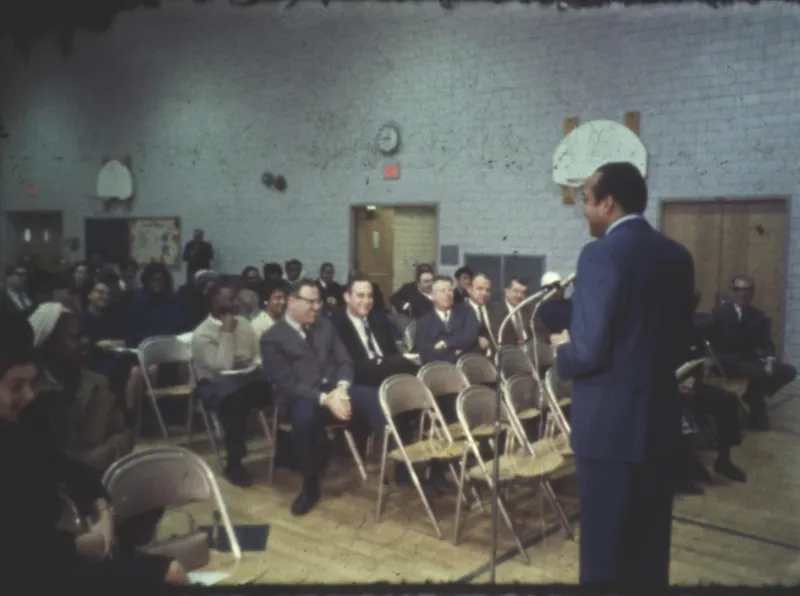
In a fellowship hall that doubles as a polling place, twenty-two women meet on the first Tuesday of each month. They bring covered dishes, a treasurer's spiral notebook, and twenty-five dollars apiece. Within the hour they will have heard four short requests from neighbors, asked blunt questions, and voted by show of hands on how to spend the eight hundred dollars they pooled that evening.
The request that wins is unglamorous: a new commercial refrigerator for the volunteer fire department's auxiliary kitchen, which feeds emergency crews during long summer wildfires. The request that loses is also unglamorous: a set of replacement tires for the senior center's van. It will come back next month.
This is a giving circle, and it is not a new idea. Collective giving took root in the United States in the 1990s and spread steadily through the 2000s, most visibly in cities. What has changed is where it is happening now — and who is holding the checkbook.
Twenty-Five Dollars and Twenty-Two Votes
The mechanics of a rural giving circle are deliberately plain. Members contribute a fixed amount, usually monthly, sometimes quarterly. A steering committee — often rotating — collects requests from local organizations. Meetings are short, publicized through church bulletins, the feed store, and a Facebook group, and open to any member in good standing. Grants are small, typically a few hundred to a few thousand dollars, and the vote is binding.
What distinguishes these groups from a donor-advised fund or a community foundation grant panel is not the amount of money in motion. It is that no one from outside the county participates in the decision. There is no application portal designed by a consultant in a distant city, no scoring rubric calibrated to national priorities, no program officer weighing a request against a strategic plan written three states away.
The refrigerator gets funded because twenty-two people know exactly how many meals the auxiliary kitchen served last summer, and because the woman who runs the auxiliary is sitting in the third row.
Why Small Money Travels Farther Off the Interstate
Philanthropic capital in the United States concentrates in metropolitan areas, and so does the infrastructure that moves it. Rural counties frequently lack a community foundation office, a full-time grant writer, or anyone with the patience to complete a forty-page federal application. The result is a quiet mismatch: need that is real but undocumented, and funding that is generous but difficult to reach.
Giving circles sidestep the mismatch by lowering the cost of asking. A request can be made in a five-minute conversation. A budget can be a single page. The accountability mechanism is not a compliance report but a follow-up visit, usually in the form of a casserole delivered to whoever is doing the work.
That informality should not be mistaken for a lack of rigor. Members of established circles tend to develop sharp instincts about which requests are sustainable and which ones will return, hat in hand, in six months. They ask about insurance, about volunteer burnout, about who will maintain the equipment after the grant is spent. In small communities, a grantee who overpromises meets the funder at the grocery store.
The Trust Ledger
Every giving circle maintains two accounts. One is financial and auditable. The other is a ledger of trust, and it is harder to reconstruct.
That second ledger is where these groups do their most consequential work. Pooling money requires members to defend their preferences in front of neighbors. Disagreement is public and usually civil, because the people disagreeing will see each other at church, at the school board meeting, and at the hardware store. Over time, that repeated low-stakes negotiation builds something larger philanthropy frequently tries and fails to manufacture: a shared vocabulary for what a community actually needs, developed by the community itself.
The trust accrues in the other direction as well. A grantee who receives eight hundred dollars from people she knows treats the money differently than an allocation from an anonymous foundation. She reports back because she wants to, not because a compliance calendar says she must.
What Large Philanthropy Cannot See
The case for giving circles is not that they should replace institutional philanthropy. Eight hundred dollars does not build a health clinic. But the circles are unusually good at identifying the small, structural gaps that large funders systematically overlook — the broken van, the failed freezer, the part-time coordinator who needs a laptop that works.
Those gaps are not trivial to the people who live with them. A senior center without reliable transportation is a senior center that serves fewer seniors. Filling that gap costs a fraction of what a formal program grant would require, and it can be done in a month rather than a grant cycle.
For donors weighing how to divide their giving, the implication is not that small is better. It is that decisions made close to the ground tend to carry information that distance erases.
A Model With Rules
The circles that endure tend to share a handful of practices, and most of them are about protecting the group from itself.
- A written charter, kept short. Members need to know what happens when attendance falls, how the money is held, and whether grants can go to individuals as well as organizations.
- Fiscal sponsorship or a bank account with two signers. Informal is not the same as undocumented.
- A cap on any single grant. Prevent one compelling evening from emptying the fund.
- Rotating facilitation. Power that stays with one person stops being collective.
- A published decline. Tell every applicant why, even when the answer is simply that the money ran out.
Starting One Without Reinventing It
A prospective founder does not need a curriculum. The most durable circles began with six people, a kitchen table, and a decision to meet monthly for a year before deciding whether to formalize. Resources exist — regional rural philanthropy associations, university extension offices, and established circles willing to share their charters — but the fastest path is usually to call the person in the next county who has already done it.
At Fundación SM, we read these efforts as evidence of something our community impact work has long argued: generosity becomes durable when the people who give also decide. The sums are modest. The consequences are not.