When the Mission Outlives Its Moment: How Beloved Community Institutions Reinvent Themselves

Every American town has one: the congregation whose pews once overflowed but now hold scattered regulars, the Little League whose rosters have thinned as families moved away, the block association founded to fight a highway that was never built. These organizations were designed for a specific moment in a specific place — and when that moment passes, they face a question that feels almost heretical to ask aloud: what are we for now?
At Fundación SM, we spend much of our time alongside community institutions navigating precisely this inflection point. What we have learned is that reinvention, done well, is not a betrayal of the past. It is a continuation of it.
The Quiet Crisis of the Embedded Institution
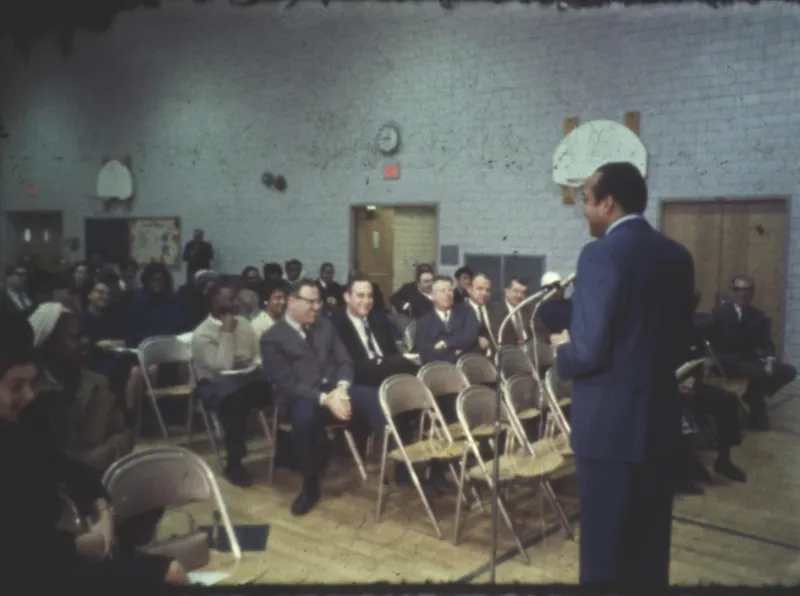
Unlike startups, community institutions rarely announce their decline. There is no board memo, no market analysis. Instead, the signals arrive gradually: the annual fundraiser draws fewer volunteers, the Sunday school has three children where there once were thirty, the neighborhood meeting that once filled a church basement now gathers a dozen loyal attendees around folding tables.
These organizations occupy a peculiar position. They are not businesses that can pivot toward new markets, nor are they purely nostalgic clubs. They are woven into the civic fabric — holders of buildings, relationships, trust, and memory. When they falter, communities lose more than a program. They lose a gathering place.
That is why the question of reinvention is not merely an organizational matter. It is a community matter.
Three Questions Before Any reinvention
Institutions that successfully navigate a second act tend to work through three questions before changing a single bylaw.
What did we actually do for people? The founding mission — a league for local kids, a parish for immigrant families, an association to stop a highway — is often the surface expression of something deeper: a promise of belonging, safety, or advocacy. Organizations that mistake their original activity for their original purpose struggle to adapt. Those that excavate the underlying promise find room to move.
What assets do we hold that others cannot easily replicate? A building with a commercial kitchen. A generation of volunteers who know every family on the block. A reputation earned over fifty years. These are not trappings of a fading mission; they are raw material for a new one.
Who else belongs at the table now? The hardest question is often the last. Reinvention driven solely by longtime insiders tends to preserve the past. Reinvention that invites newcomers — younger families, new arrivals, neighbors who never joined before — tends to produce something genuinely alive.
A League Becomes a Lifeline
Consider a youth baseball league in a mid-sized Midwestern city, one of many we have watched wrestle with this transition. Enrollment had fallen by half over a decade as families moved to the suburbs. The board faced a choice familiar to thousands of similar organizations: dissolve with dignity, merge with a neighboring league, or change.
They chose to change — but carefully. The league kept its name, its fields, and its opening-day parade, understanding that these rituals were the connective tissue of its identity. What it discarded was the assumption that its purpose was baseball itself. Surveys of local families revealed a different need: affordable after-school programming and a safe place in the hours between the final bell and dinnertime.
Today the organization runs tutoring sessions in the concession stand, a summer jobs pipeline for teenagers who once played in its outfield, and yes, still a baseball league — smaller, but rooted. The mission did not survive unchanged. It survived by becoming more useful.
When Sacred Spaces Serve New Purposes
Congregations face perhaps the steepest version of this challenge, since their identity is bound to both faith and place. Yet some of the most instructive second acts we have observed come from houses of worship. A shrinking congregation in the Northeast opened its building to a bilingual charter school during the week and a community health clinic on Saturdays. Another transformed its underused parking lot into housing, working with a nonprofit developer, while maintaining its sanctuary and its congregation.
In each case, the institution asked what its community needed from its physical presence, not just its spiritual one. The answer required humility — sharing space, sharing credit, sharing decisions — but it preserved the institution's most valuable asset: its role as a trusted anchor.
Legacy as Launchpad
There is a temptation, in conversations about organizational change, to treat legacy as dead weight. Our experience suggests the opposite. Legacy is an inheritance, and like any inheritance, its value depends on what you build with it.
The institutions that thrive through reinvention share a common posture: they honor their history without being governed by it. They keep the rituals that bind people together and release the programs that no longer serve. They treat their founders' generosity not as a script to recite but as a seed that was always meant to grow into something new.
For the donors, volunteers, and neighbors who love these institutions, the invitation is clear. Resist the urge to fund nostalgia. Ask instead what the organization's core promise looks like in the present tense — and then help it keep that promise in whatever form the moment requires.
A place that is changing faster than we would like is not a place we have lost. It is a place asking us, once more, to show up.